Reading time: 9 minutes
Introduction: The Fragmented Social Media Landscape of Today
In 2025, the social media marketing landscape feels more like a patchwork quilt than a cohesive strategy. You’re probably juggling a content creation tool (Canva, anyone?), a scheduling platform (Hootsuite, Buffer), an analytics suite, and maybe even a separate AI writing assistant. Each with its own subscription, its own learning curve, and its own set of limitations.
This fragmentation isn’t just inconvenient; it’s a drain on your time, your budget, and your team's sanity. The promise of AI has been whispered for years, but now, it’s delivering. We're on the cusp of a significant shift, moving from AI-enhanced tools to truly AI-first platforms that integrate every aspect of your social media strategy into a single, intelligent ecosystem.
This guide cuts through the noise to help you navigate this new terrain. We’ll explore why the traditional approach is no longer sustainable, what to look for in next-generation AI tools, and how to choose the perfect platform to transform your social media presence in 2025. Get ready to ditch the patchwork and embrace a streamlined, powerful future.
1. Why Traditional Social Media Tools Are Becoming Obsolete
Traditional tools like Hootsuite and Buffer have served us well, but their foundational architecture wasn't built for the generative AI era. They were designed for scheduling and basic analytics, not for dynamic content creation, predictive insights, or real-time strategic adjustments. Here’s why they’re falling behind:
- Lack of Native AI Integration: Most offer AI as an add-on, not a core feature. This leads to clunky workflows and limited capabilities.
- Fragmented Workflows: You still need separate tools for content creation, image generation, caption writing, and deep analytics.
- High Costs: Stacking multiple subscriptions quickly adds up, often without delivering a cohesive solution.
- Generic Content: Without advanced AI, content generation often remains generic, lacking the nuance and personalization needed to stand out.
- Limited Strategic Insight: They tell you what happened, not why or what to do next.
The market is rapidly evolving, demanding tools that do more than just manage; they need to strategize, create, and optimize autonomously.
2. The Rise of AI-First Social Media Platforms
Enter the new breed: AI-first platforms. These tools are built from the ground up with artificial intelligence at their core, offering a truly integrated experience. They aim to be your one-stop shop for everything social media, from ideation to execution and analysis.
Key characteristics of AI-first platforms:
- Seamless Content Generation: AI assists in writing captions, generating images, and even conceptualizing entire campaigns.
- Predictive Analytics: Move beyond historical data to anticipate trends, optimal posting times, and audience engagement patterns.
- Automated Optimization: AI actively suggests and implements improvements to your content and schedule for maximum impact.
- Strategic Coaching: Some platforms go further, offering AI-driven insights and recommendations that act like a digital marketing consultant.
- Unified Dashboard: Everything is accessible from a single interface, drastically reducing context switching and improving efficiency.
This shift isn't just about automation; it's about intelligence and strategic partnership, enabling marketers to focus on creativity and high-level strategy rather than repetitive tasks.
3. Key Criteria for Choosing Your AI Social Media Tool
With so many options emerging, how do you pick the right one? Here are the critical factors to consider:
3.1. Native AI Integration vs. Add-on Features
This is perhaps the most crucial distinction. Does the AI feel like an afterthought, or is it deeply woven into every feature? Look for:
- Generative AI for Content: Can it create text, images, and videos from prompts?
- Predictive Scheduling: Does it recommend optimal posting times based on audience behavior?
- Performance Analysis: Does it provide actionable insights beyond basic metrics?
A truly native AI integration means the tool learns from your actions and audience, continuously improving its suggestions and automation.
3.2. Customization and Brand Voice Consistency
Your brand has a unique voice. Can the AI tool adapt to it? Ensure the platform allows you to:
- Define Brand Guidelines: Input your tone, style, and specific keywords.
- Train the AI: Some advanced tools allow you to 'train' the AI on your past successful content.
- Review and Edit: Always maintain human oversight. The AI should assist, not replace, your creative input.
3.3. Multi-Platform Support and Integration
Your social media strategy likely spans several platforms. The tool should:
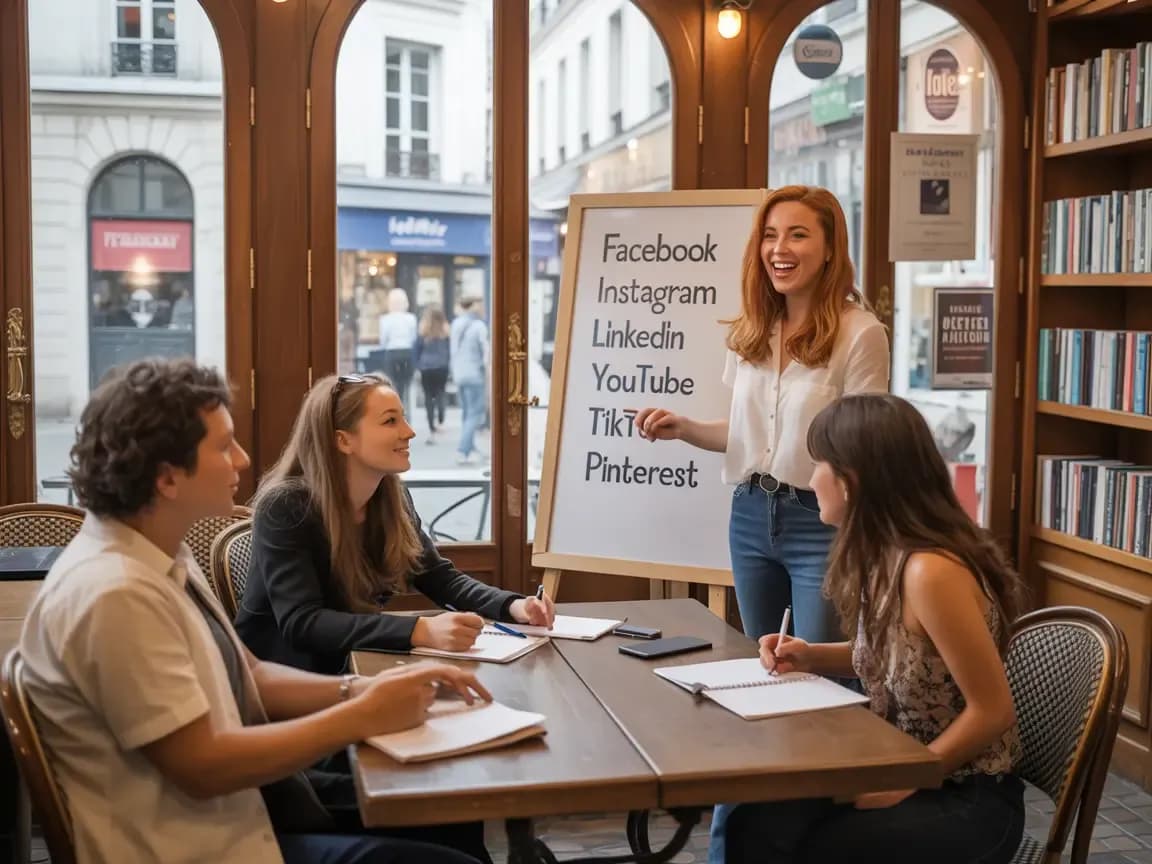
- Support All Key Platforms: Facebook, Instagram, X (Twitter), LinkedIn, Pinterest, TikTok, YouTube.
- Offer Platform-Specific Optimization: Recognize the nuances of each platform (e.g., character limits for X, visual focus for Instagram).
- Integrate with Other Marketing Tools: CRM, email marketing, analytics.
3.4. Analytics and Reporting Capabilities
Data is king. Look for comprehensive analytics that offer:
- Real-time Performance Tracking: Monitor engagement, reach, and conversions.
- Audience Insights: Understand demographics, interests, and behavior.
- Competitive Analysis: Track what your competitors are doing.
- Customizable Reports: Generate reports tailored to your stakeholders.
- AI-driven Recommendations: Beyond just reporting data, does it tell you what to do with it?
3.5. Strategic Coaching and Growth Features
This is where some AI-first tools truly shine, acting as a virtual marketing strategist. Look for features like:
- Goal Setting and Tracking: Helps you define and monitor marketing objectives.
- Content Strategy Suggestions: Recommends topics, formats, and campaigns.
- Performance Benchmarking: Compares your results against industry standards.
- Audience Segmentation: Helps you target specific groups more effectively.
These features move beyond simple automation to genuine strategic support, making them invaluable for sustained growth.
4. Comparing Leading AI Social Media Tools in 2025
Let’s look at how some of the prominent players stack up, from established names incorporating AI to emerging AI-first innovators.
| Feature/Platform | Hootsuite (AI-Enhanced) | Buffer (AI-Enhanced) | Socialness.ai (AI-First) |
|---|---|---|---|
| Core Philosophy | Scheduling & Management with AI add-ons | Simple Scheduling & Analytics with AI writing | Integrated AI-driven Strategy, Creation & Management |
| Native AI Integration | Basic AI writing, content suggestions (via OwlyWriter AI) | AI Assistant for captions, ideas | Deep integration: AI content generation (text, image), predictive scheduling, strategic coaching, audience insights |
| Content Creation | Limited AI text generation | AI-generated captions & ideas | Full-suite AI content studio (text, images, video scripts, blog posts) |
| Analytics & Reporting | Comprehensive, but often retrospective | Basic to Advanced, with some AI insights | Predictive, actionable insights, competitive analysis, trend forecasting |
| Strategic Coaching | Minimal | Limited | Extensive AI recommendations for growth, goal tracking, audience segmentation |
| Pricing Model | Tiered, can be costly with all add-ons | Tiered, generally more affordable for small teams | Value-driven, often more comprehensive features for the price due to integration |
| Best For | Large enterprises needing extensive integrations | Small businesses, individuals needing simple scheduling | Solo entrepreneurs, SMEs, Marketing Agencies seeking an all-in-one AI solution for growth |
This comparison highlights the fundamental difference: while Hootsuite and Buffer are great at managing, Socialness.ai aims to transform your social media strategy with its proactive, integrated AI capabilities.
5. Choosing the Right Tool for Your Profile
Your ideal AI tool depends heavily on your specific needs, budget, and desired level of AI assistance. Here’s a breakdown by profile:
5.1. Solo Entrepreneur / Small Business Owner
- Needs: Time-saving automation, easy content creation, affordable.
- Best Fit: An all-in-one AI-first platform that handles content generation, scheduling, and basic analytics. Look for intuitive interfaces and strong strategic coaching features to guide your efforts.
- Recommendation: Socialness.ai, Later (with AI features).
5.2. Growing SME / Mid-sized Company
- Needs: Scalability, team collaboration, advanced analytics, brand voice consistency, ROI tracking.
- Best Fit: A platform that offers robust team management, customizable AI, and detailed reporting. Strategic coaching becomes more important for optimizing campaigns.
- Recommendation: Socialness.ai, Sprout Social (with AI integrations).
5.3. Marketing Agency / Large Enterprise
- Needs: Multi-client management, advanced customization, deep analytics, competitive intelligence, API integrations, enterprise-level support.
- Best Fit: A powerful AI-first platform with robust security, comprehensive reporting across multiple brands, and the ability to integrate with existing tech stacks. AI strategic coaching for client recommendations is key.
- Recommendation: Socialness.ai (for an AI-first approach), Hootsuite Enterprise (for extensive integrations).
6. Conclusion: Embracing the AI-First Future of Social Media
The transition to AI-first social media tools isn't just an upgrade; it's a fundamental shift in how we approach digital marketing. By moving beyond fragmented tools and embracing integrated, intelligent platforms, you can unlock unprecedented efficiency, creativity, and strategic advantage.
The right AI tool in 2025 will not only manage your posts but will actively help you strategize, create compelling content, and optimize your performance with precision. Whether you're a solo entrepreneur or a large agency, the goal remains the same: to maximize your social media ROI with less effort and greater impact.
Take the leap. Explore the AI-first options, assess your needs against the criteria outlined, and empower your social media strategy for sustained success in a rapidly evolving digital world.
✅ Quick Wins Checklist for Choosing Your AI Tool
- Audit Your Current Tools: List all your social media subscriptions and their costs.
- Identify Pain Points: Where are you losing time or struggling with content/strategy?
- Define Your "Must-Haves": What are the non-negotiable features for your team?
- Prioritize Native AI: Look for platforms where AI is a core feature, not an add-on.
- Test Drive: Utilize free trials to experience the AI capabilities firsthand.
- Consider Scalability: Will the tool grow with your business needs?
- Evaluate Strategic Coaching: Does it offer guidance, not just automation?
- Check Support & Community: Good support can make a huge difference.
📊 Bonus Statistics to Know About AI in Social Media
- 80% of marketers believe AI will revolutionize their industry by 2025. (Adobe)
- AI-powered content generation can increase content output by up to 5x. (Forbes)
- Companies using AI for social media marketing see a 15-20% increase in engagement. (Accenture)
- 65% of consumers expect personalized experiences, a task made efficient with AI. (Salesforce)
- The AI in social media market is projected to reach $6.1 billion by 2027, growing at a CAGR of 31.8%. (MarketsandMarkets)
FAQ: Your Top Questions About AI Social Media Tools Answered
Q: What is an AI-first social media tool?
A: An AI-first social media tool is built with artificial intelligence at its core, integrating AI into every function from content creation and scheduling to analytics and strategic recommendations, rather than just adding AI as a supplementary feature.
Q: How do AI-first tools differ from traditional social media management platforms?
A: Traditional platforms (like older Hootsuite/Buffer versions) focus on scheduling and basic analytics. AI-first tools go beyond this by using AI for generative content (text, images), predictive analytics, automated optimization, and strategic coaching, offering a more holistic and proactive approach.
Q: Can AI tools truly understand my brand voice?
A: Yes, advanced AI tools allow you to define brand guidelines, input past successful content, and even train the AI on your specific tone and style, ensuring consistent brand voice across all generated content.
Q: Are AI social media tools expensive?
A: Pricing varies. While some advanced AI-first platforms may seem pricier upfront, they often replace the need for multiple subscriptions (content creation, analytics, scheduling, etc.), potentially offering a better overall value and ROI compared to a fragmented tech stack.
Q: Do I still need a human marketer if I use an AI tool?
A: Absolutely. AI tools are powerful assistants, but they don't replace human creativity, strategic thinking, or ethical judgment. Marketers will shift from repetitive tasks to higher-level strategy, creative oversight, and building genuine audience connections, leveraging AI to amplify their efforts.